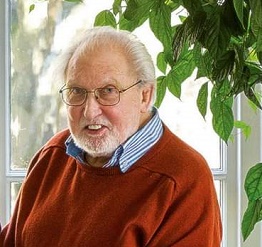
Bob Golding (1937-2022): A Life Lived for Animals And Other Creatures


The Oasis Reporters
March 6, 2022
A tribute by Saheed Aderinto
When Bob Golding arrived in Nigeria as the first curator of the Zoological Garden of the University of Ibadan, three years after the Union Jack was lowered in the country, very few people knew about the everyday life of wild animals in captivity.
For centuries, Africans have kept private menageries, like the one in my family compound of Dele Solu in Oje (Ibadan) where a crocodile has lived for over 80 years, for reasons beyond entertainment, to include spirituality and community bonding.
But modern zoos have a different orientation (both in their purposes and curatorial practices) from the “traditional” menageries.
For 16 years, Golding would develop the Ibadan Zoo into Nigeria’s biggest menagerie, thus transforming animal spectacle and human-animal relations in significant ways. Under his watch, the University of Ibadan Zoological Garden became the most visited tourist attraction in Nigeria by 1979.
By curating famous wild animals for public entertainment, a new kind of postcolonial animal-conscious childhood emerged across southwestern Nigeria. At the zoo, school children had a protected contact with wild animals they first encountered in books, TV and radio programs, newspapers, and oral African folklores.
Their compassion for tamed beasts went hand in glove with the fear of being mauled if they escaped from their entrapment. It was this duality of fear and joy that made zoo going fascinating for Nigerian children, including eight-year-old Saheed Aderinto, who visited the zoo for the first time in 1987. Of course, animals were just one of the worlds that Golding created for himself and for millions of postcolonial Nigerian children. He also had a private human-human life!
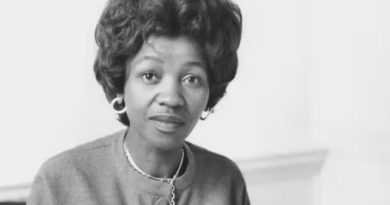
While in Nigeria, he met and got married to Lois Patricia (Lord-Lieutenant for Bristol Peaches Golding), an African American who was then teaching at Loyola College, a famous high school in Ibadan.
I first met Golding, neither in Nigeria nor in his home country in the UK, but on the Facebook page of the Nigerian Nostalgia Project.
In 2017, while writing my book on human-animal relations in Nigeria, I saw a post on Golding, his animals, and his website. Before then, I worried about a component of the book, which focuses on the history of Nigerian zoos. But the website and Golding’s incredible life gave me an easy entry. When I eventually revisited the Ibadan zoo to conduct oral interviews and reconnect with a vanishing past of live animals, now manifesting in embalmed animal bodies, and thick iron bars and concrete walls where they once lived, I had a good idea of how to position the role that caged animals played in the spectacle of nature and childhood.
I contacted Golding. He wrote extensively to me, clarifying some of the texts on his website and providing rare context to the pictures. Among his profound contributions to my book is his insistence that I spell “Haruna,” the gorilla, as “Aruna,” not “Haruna.” This compelled me to think about the historicity of names, phonology, and diction in the 1960s, when Aruna was rescued at the Ibadan Zoo, after being trafficked into Nigeria from Cameroon.
How “Aruna” was pronounced would determine whether the gorilla would respond to humans or even play with them. Academic historians focus more on rendering names of places and people in “standard” form, than reflecting over how the people of the past would feel about how we write and pronounce their names. Although Aruna died in 1995, Golding was still fighting for his beloved friend by making sure his name is written and pronounced the way he would have loved it!
As my book, “Animality and Colonial Subjecthood,” finally makes its way into reading hands in a few days, I thank Golding for enhancing my research and writing, and for allowing me to reproduce photos from his website in the book. He signed all the copyright papers and agreed to accept only a complimentary copy of my book in exchange for allowing me to use his photos. Securing copyright permission to use photos for academic books is not an easy task. The National Archives in the United Kingdom demanded over $1,000 for images that Golding allowed me to use for free.
I penned a few words in appreciation of the Nigerian Nostalgia Project in the acknowledgement of my book, even as I regret that Golding would be unable to fulfill his promise to virtually participate in the book presentation scheduled to hold at the University of Ibadan Zoological Garden in July.
Rest well, Bob Golding, the animal lover!
Saheed Aderinto is Professor of African History at Western Carolina University, USA. He has published eight books, including Animality and Colonial Subjecthood in Africa: The Human and Nonhuman Creatures of Nigeria (Ohio University Press, 2022).