9mobile To Get It’s Groove Back By Actively Sharing Infrastructure On MTN Network, As Approved By NCC From June 2


The Oasis Reporters
May 30, 2025


By Greg Abolo with additional reporting from Tech Cabal.
Come June 2, 2025, the tune for 9mobile is going to be upbeat and starting from the South South, South East and North Central, there will be elaborate road shows to signify that the network with the most significant losses is bouncing back to take it’s place in the sun.
It is coming back strongly.
Generally known as National Roaming(NR) now named Active Infrastructure Sharing(AIS) by both networks.
This would commence with a press briefing on June 2nd in Lagos.
Agreement is to ensure 9mobile coverage on MTN Infrastructure anywhere nationwide within the shortest possible time.
Hello, Enugu, Ebonyi, Abia, and Benue States, you will be lit up between the 2nd and 5th of June.

There would be Press conferences and Roadshows in Enugu and Port Harcourt on the 5th of June with simultaneous launching in Port Harcourt at the same period.
Initial commencement of launching exercise in the South South and South East which will be further spread nationwide.
9mobile subscribers will soon smile with an assured network improvement for the nation to beam with joy.
At The Oasis Reporters, we couldn’t miss the shared optimism after reviewing the initial pre-joint press conference talking about this collaboration between MTN and 9mobile, endorsed by the NCC.
According to Tech Cabal, after nearly five years of regulatory delays, 9mobile has secured approval from the Nigerian Communications Commission (NCC) to launch national roaming services on MTN Nigeria’s infrastructure in June 2025, according to two people with direct knowledge of the deal.
This move is a critical lifeline for the struggling operator, whose market share has plummeted to 1.72% in April 2025, down from 6.6% in 2020 when it first sought the approval.
This move is a critical lifeline for the struggling operator, whose market share has plummeted to 1.72% in April 2025, down from 6.6% in 2020 when it first sought the approval.
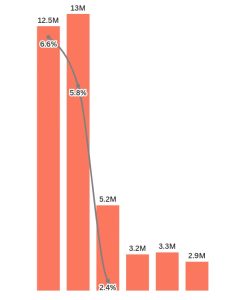
The national roaming journey began in August 2020, when the NCC granted MTN and 9mobile a three-month pilot to test roaming capabilities. Although that trial concluded in October 2020, a full commercial rollout was stalled for years, until the recent approval paved the way for a nationwide launch. The move allows 9mobile to extend coverage into regions lacking its infrastructure, significantly improving service reliability for its remaining users.
At the center of the rollout is a national roaming and spectrum-sharing agreement between 9mobile and MTN made in August 2020.
Under the deal, 9mobile users will be able to make calls, send SMS, and access mobile data by connecting to MTN’s expansive infrastructure in areas where 9mobile’s network is weak or absent. The partnership is designed to mitigate the chronic service disruptions and coverage gaps that have plagued 9mobile and contributed to its subscriber losses.
For 9mobile, the agreement is a strategic opportunity to regain lost ground without the financial burden of building out its national infrastructure. It also opens the door for a potential comeback in the telecom rankings.
With Globacom’s market share falling to an all-time low of 11.9% in April 2025, down to 20.6 million subscribers, analysts say the race for the third-largest operator is wide open.
“The number three spot is still very much in play,” said one telecom executive who requested anonymity to speak freely.
“Now that 9mobile will have access to MTN’s national footprint, it’s all about how well they can package and market their services.
Identity still matters—many of their users are tied to their numbers. If they bundle smartly, they can start to claw back users.”
The agreement is also a strategic win for MTN. In return for providing access to its infrastructure, MTN gains the ability to utilise 9mobile’s underused spectrum assets in the 900 MHz, 1800 MHz, and 2100 MHz frequency bands. These bands are vital for expanding coverage and improving data capacity, especially in areas where network congestion is a persistent issue.
The 900 MHz spectrum, for instance, is highly effective for wide-area coverage and indoor penetration, making it ideal for rural and semi-urban areas. Meanwhile, the 1800 MHz and 2100 MHz bands provide the high capacity needed in dense urban markets. For MTN, which serves over 84 million subscribers, this spectrum access could significantly enhance performance, reduce congestion, and improve the customer experience.
Still, some caution that regulatory oversight could limit how the spectrum is used. “It’s a calculated bet for both operators,” said the same telecom executive. “The NCC will likely impose restrictions to ensure fair use and prevent market distortions.”
For the NCC, the deal represents more than just a bilateral business arrangement. It underscores the Commission’s broader strategy to foster infrastructure sharing and promote spectrum efficiency in a high-cost operating environment.
National roaming agreements like this are seen as essential to improving service delivery while avoiding the duplication of costly network deployments.
The NCC did not respond to requests for comments.
As 9mobile prepares for its long-awaited national roaming launch, the telecom industry will be watching closely. If executed well, the deal could serve as a blueprint for how smaller operators can stay competitive in a landscape increasingly dominated by MTN and Airtel. More importantly, it offers hope that millions of Nigerian mobile users, particularly in underserved areas, could soon enjoy better, more consistent connectivity.
With Frank Eleanya, Tech Cabal.