
Adelabu’s Apology: The Tight Spot It Puts Tinubu. Options Before The Power Minister To Reach His Goal, Restore His Credibility


The Oasis Reporters
March 26, 2026


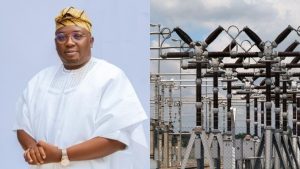
It was amazing to see and watch Nigeria’s Energy minister tender an apology to electricity challenged Nigerians about his ministry’s astonishing romance with deep darkness, whereas he had come into office under the high hopes then Presidential aspirant, Bola Tinubu made in contrast to the unmitigated failure of his predecessor and party member, Muhammadu Buhari who raised hopes and crashed them with former governor of Lagos State, Babatunde Fashola as Power Minister.
The pair of Buhari and Fashola as president and cabinet minister, later replaced four years later by Engr. Saleh Mammam and Abubakar Aliyu as ministers plunged Nigeria into further darkness. That was Nigeria’s inglorious reputation for eight long years. Signs of a lack of strategy, ability and proper planning.
Tinubu had declared in 2023 that if he fails to provide sufficient electricity to Nigerians, no one should vote for him into a second term in office in 2027.


One year to 2027, Adelabu is offering apologies for the persistent darkness that has affected lives, health and businesses.
Therefore he is promising to do something that would make Nigerians praise him when he reaches 6,000MWs electricity for a country of about 180 million population.
Whereas just New York City alone in the United States has a total generating capacity of around 41.3 GW (41,750 MW), with various power plants across the state contributing to this total. The city’s electricity generation mix is quite diverse, with natural gas being the primary source, accounting for about 47% of the total, followed by nuclear power at 21.5%, hydroelectric power at 19.5%, wind at 5.2%, and solar at 4% .
A GW is 1000MW.
Nigeria is probably waiting for natural rainfall to perhaps take us to 6,000MW. Yet it has more gas reserves than crude oil.
All the power ministers Nigeria has had since independence make the nation look dumb and bereft of any atom of seriousness when it comes to power provision for the country.

But just a serious city knows the importance of electricity to life and industry. Therefore, some of the major power plants in New York City include:
Astoria Generating Station: a natural gas and oil-fired power plant with a capacity of around 942 MW.
Ravenswood Generating Station is a natural gas and oil-fired power plant with a capacity of around 2,193 MW.
Brooklyn Navy Yard is a natural gas-fired power plant with a capacity of around 266 MW.
Then look at South Africa on the continent.
South Africa generates approximately 44GW (or 44,000 megawatts) of electricity, with Eskom, the state-owned utility, producing around 95% of the country’s electricity. The country’s installed capacity is expected to increase to 77,834 megawatts by 2030, with a significant focus on renewable energy sources.
To give a better idea, here’s a breakdown of South Africa’s energy mix:
Coal : 80% of installed capacity
Renewables: Growing contribution, with 6,180 MW of renewable capacity added through operational projects
Nuclear: 1,860 MW (Koeberg nuclear power station)
Gas-to-Power: Expected to contribute 16,000 MW by 2039.
Serious countries may have power challenges, but they have the people with brains who are intentional and deliberate in plans to address the challenges.
Egypt has transitioned from a power deficit country to a power sufficient nation, that now exports power to neighboring countries in North Africa so as to earn foreign exchange.
Between New York City, South Africa as a country as well as Egypt, Nigeria is more endowed with the resources to convert to electricity like Gas, Crude Oil and other natural resources in the realms of renewables. All we’ve always gotten are the shifting of blame on previous regimes, sheer bumbling incompetence and more apologies.
Founder of Econet Wireless telecommunications firm in Zimbabwe who equally made the first GSM call in Nigeria, Engr. Strive Masiyiwa once wrote that:
” ….you need an entrepreneur to start a company, but you need entrepreneurs, at all levels of a growing company.
There are 100 year old companies that are developing amazing new products, and re-inventing themselves constantly. They may not call it, using such cool words as “entrepreneur”, but they employ entrepreneurs, to drive change and innovation. Being an entrepreneur is at its best a way of thinking, and a mindset.”
I read it and sighed, and paraphrased Moses, the prophet: “Oh, how I wish all God’s people were entrepreneurs.”
Entrepreneurs are the most treasured, and most valued employees, in any organization that wants to be successful. But in Nigeria, what we project forward are politicians who display nothing else but how to win the next election.
Off-grid solar power may eventually come to the rescue of Nigerians with the enormous resources to install it in their homes. Relying on the government may turn out to be hopeless.
But Adelabu has his eyes fixed on governing his home state of Oyo after the final tenure of Engr. Makinde in the governor’s office. He has a short time to prove some seriousness and gather some credibility to campaign with in 2027.
Greg Abolo with online searches.


