Apple Chief Executive Tim Cook Resigns After 15 Years. What’s Next For The Tech Giant?


The Oasis Reporters
April 21, 2026


Rajat Roy, Bond University
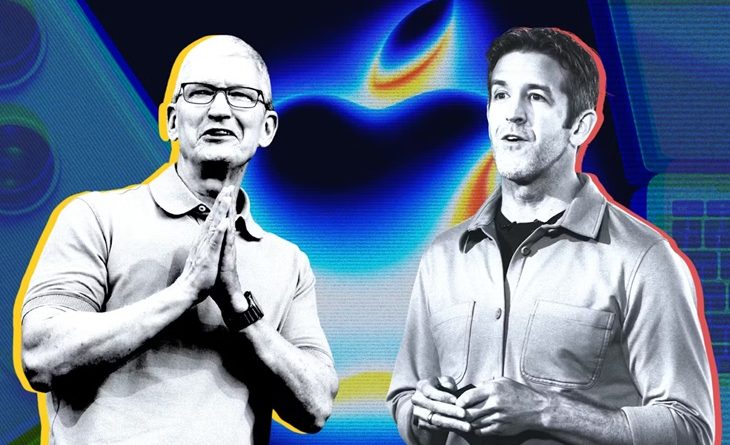
Today, Apple announced the tech company’s longtime chief executive Tim Cook will step down and transition to the role of executive chairman of Apple’s board of directors.
This change will take effect from September 1 2026. John Ternus, currently Apple’s senior vice president of hardware engineering, will take over as chief executive.
However, Cook will remain in place until then to ensure a “smooth takeover”. As chairman, he’ll then take on a more strategic role of engaging with policy makers and corporate governance.
Ternus is a 25-year-veteran at Apple. He is widely seen as an internal replacement shaped by long-term succession planning. His appointment marks Apple’s first leadership transition since Cook took over from Steve Jobs in 2011.

Rather than signalling a dramatic shift, this transition is likely going to be more subtle, without a major strategic reset.
A rich legacy for Cook
Cook was only the second chief executive in Apple’s history, after cofounder Steve Jobs resigned in 2011 and died six weeks later.
Cook is widely recognised for his strengths in operations, scale and business model innovation. Under his leadership, Apple became one of the most successful global supply chain organisations reaching more than 200 markets worldwide. The company’s value grew from about US$350 billion in 2011 to US$4 trillion today.
Importantly, Cook drove a decisive shift towards service monetisation – charging users fees for Apple’s digital services and subscriptions, rather than just making money from selling devices such as iPhones, iPads and laptops. Cook’s strategy capitalised on Apple’s already massive base of 2.5 billion active devices.
Service monetisation led to high-margin revenues from Apple’s offerings such as iCloud, Apple Music and the Apple store. Consequently, Apple made more than US$100 billion in 2025 from this business, providing a stable and predictable income beyond cyclical hardware sales.
Who is John Ternus?
In contrast to Cook, Ternus has a deeply technical, product-oriented background shaped by more than two decades in hardware engineering.
At Apple, he has overseen the development of key product lines that include many iterations of the iPhone, iPad, AirPods and the Apple Watch, among others. He’s been closely associated with advances in materials, durability and performance.
Ternus spearheaded the recent introduction of the relatively affordable MacBook Neo and the radically thin yet durable iPhone Air. He also led the way on incorporating an unprecedented active noise cancellation feature into AirPods, which the company described as “world’s best”.
The difference in background between Cook and Ternus suggests a subtle but important shift in emphasis for the technology giant.
While Cook focused on transforming Apple into a highly monetised ecosystem anchored in services and global scale, Ternus is likely to reassert the importance of product-led innovation. In his current role, he’s been focusing on engineering excellence and integrating fresh technologies into Apple devices.
With Ternus at the helm, it’s likely the company will try to balance an optimised ecosystem of revenue (that is, service monetisation) with reinvigorating the hardware products that sustain it. That would make a lot of sense.
Apple faces numerous pressures
A stronger product focus under Ternus may also become the company’s response to multiple structural pressures facing Apple.
In the Cook era, Apple was often criticised for incremental innovation, in contrast to Jobs’ visionary leadership that was credited with changing modern consumer tech.
Major competitors Google and Microsoft are making rapid advances in cloud-based artificial intelligence (AI), with Apple seemingly lagging behind (although some experts say not investing as heavily in AI could be a worthwhile response to the AI hype bubble).
Apple’s device-centric approach will ensure products are meaningfully distinct from competitors through partnerships. For example, the company will be using Google’s Gemini AI as the basis for an enhanced Siri assistant. At the same time, consumers are upgrading their devices more slowly, so Apple will need more compelling product innovation to drive demand.
The company is also vulnerable to global supply chain disruption due to geopolitical tensions. This can negatively impact Apple’s timelines of product delivery, and even lead to lower-quality products if suppliers can’t fulfil Apple’s expectations. In recent years, Apple has already been addressing this by moving some of its manufacturing from China to Vietnam.
Time will tell, but so far everything suggests Ternus succeeding Cook as Apple chief executive will represent a logical and necessary calibration of strategy, rather than a radical shakeup.
Rajat Roy, Associate Professor, Bond Business School, Bond University
This article is republished from The Conversation under a Creative Commons license. Read the original article.