Egypt And Access To The Waters Of The Nile : Citizens’ Initiatives To Sidestep Conflict With Options To Productivity


The Oasis Reporters
August 1, 2025


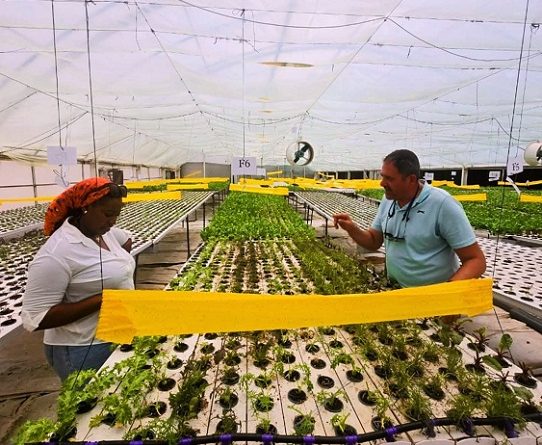
Photo credit: Dr. Jekwu Ozoemene
One of the sticking points in the relationship between the North African country of Egypt and its neighbors, Sudan and Ethiopia has always been access to waters of the majestic River Nile.
Putting the story in very sharp contrast would reveal that the Nile River source blossoms to wider access from Ethiopia and the Sudan. That’s talking about the Blue Nile and the White Nile. Colonial treaties crafted by the British shared the amount of water that Egypt had the absolute rights to receive.
Egypt often claims that any unusual tampering would turn them into arid desertification, making them unable to produce food. A business that they have been proficient at since ancient times.
Their food production prowess fed the world in the days of Jacob and his sons, through the economic sagacity of their then Prime Minister, Joseph in biblical terms.
Therefore their sabres would rattle if their access to the precious waters of the Nile diminished. And Egypt has one of the best armies in the world.
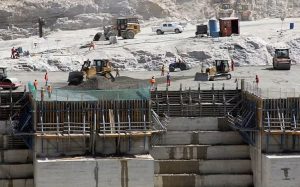
But other nations are rising and daring nowadays. War hardened Ethiopia has dared everyone by building the great Renaissance Dam.
Hunger and starvation once ravaged Ethiopia to the extent that singers/songwriters like Lionel Richie and Michael Jackson had to come together with other international icons in music to compose and sing a song that sold in millions of dollars in order to raise funds, buy food and send to Ethiopia to stave off extinction through starvation.
We Are The World was the song.
The lyrics:
There comes a time when we heed a certain call
When the world must come together as one
There are people dying
And its time to lend a hand to life
The greatest gift of all
We can’t go on, pretending day by day
That someone, somehow will soon make a change
We are all a part of Gods great big family
And the truth, you know,
Love is all we need
We are the world, we are the children
We are the ones who make a brighter day
So lets start giving
There’s a choice we’re making
We’re saving our own lives
Its true we’ll make a better day
Just you and me
Send them your heart so they’ll know that someone cares
And their lives will be stronger and free
As God has shown us by turning stones to bread
So we all must lend a helping hand
We are the world, we are the children
We are the ones who make a brighter day
So lets start giving
There’s a choice we’re making
We’re saving our own lives
Its true we’ll make a better day
Just you and me
When you’re down and out, there seems no hope at all
But if you just believe there’s no way we can fall
Let us realize that a change can only come
When we stand together as one
We are the world, we are the children
We are the ones who make a brighter day
So lets start giving
There’s a choice we’re making
We’re saving our own lives
Its true we’ll make a better day
Just you and me
We are the world, we are the children
We are the ones who make a brighter day
So lets start giving
There’s a choice we’re making
We’re saving our own lives
Its true we’ll make a better day
Just you and me
Songwriters
RICHIE, LIONEL / JACKSON, MICHAEL
Yet, Ethiopia has land and the source of the River Nile flowed from their land. Due to certain colonial treaties handed down by Britain, they were limited in tampering with the waters.
Here’s a short history of the River Nile.
Rivers originating in the Ethiopian highlands, which include the Blue Nile (Abay), provide more than 85% of the water that flows into the Nile River.
The rest of the Nile’s waters come from the White Nile, which flows from the Great Lakes Region of Central Africa.
Since the 1920s, Egypt has, through colonial-era treaties, established near-total control of the Nile. The 1929 Anglo-Egyptian Treaty estimated the average annual flow of the Nile as 84 billion cubic metres (BCM). It allocated 48 BCM to Egypt and four BCM to Sudan. The 1959 Nile Treaty increased Egypt’s portion to 55.5 BCM (66% of Nile waters) and Sudan’s to 18.5 BCM (22%).
The rest, 10 BCM or 12% of Nile waters, was set aside to account for seepage and evaporation. This effectively exhausted the Nile’s annual flow. The rights of Ethiopia and the other upstream states were not recognised. These states were not allocated any of the Nile waters.
The treaties also granted Egypt and Sudan the power to veto construction projects on the Nile and its tributaries.
Well, Ethiopia reached a turning point in its thinking about the Nile basin and it’s utilization. So it decided to construct the Grand Renaissance Dam despite the protestations and threats of Egypt. The Dam started operations on February 20, 2022. Thus unilaterally breaking the back of the old colonial treaties that handed absolute control over the Nile to Sudan and Egypt.
Ethiopia that has one of the primary sources of Nile then decided that it was time to assert it’s rights.
Citizens of both countries in Egypt and Ethiopia have been pensively looking at the issues beyond government eyes and are looking at areas to create alternatives to crises on the African continent that is already war weary.
One of the iconic personalities is Zambian/Egyptian born Mohammed Salama, M/D of Tulima Farms.
Nigerian born International Banker, Dr. Jekwu Ozoemene recently visited Cairo Egypt, where he took the opportunity to explore the magic of Tulima Farm’s 25,000sqm of advanced, data-driven, climate-controlled greenhouse in El Beheira, approximately 200km outside Cairo.
He unpacks his ground breaking tour, showing one of the resilient avenues of using less water to produce more, while avoiding conflicts.
“Tulima Farms was founded by my Zambian-Egyptian brother and friend Mohammed Salama. Mohammed doesn’t do half measures, and Tulima Farms is another testament.
Prior to this visit, the last time I saw Mohammed in person was in February 2014, when my tour as MD/CEO of Access Bank Zambia was coming to an end. Mohammed insisted on personally dropping me off at the Kenneth Kaunda International airport.
It was as if we were trying to extract the last in-person dregs of what had been a great friendship that spanned the over three years that I spent in Zambia.
That friendship and communication remained intact over the next 11 years, culminating to this visit.
The visit was as enlightening as it was mind-blowing.
Tulima Farms uses state-of-the-art technology and ancient Egyptian farming techniques to help modernise climate-positive farming. Its products are grown vertically and hydroponically in upcycled container boxes.
Yields are increased by saving valuable fresh water (they can use 25 litres of water a week to grow a yield equivalent to 2.5 acres), using the least energy, strictly avoiding harmful chemicals, a dynamic LED system and climate control that optimises the living conditions of each crop individually so it can thrive in nutrients, quality, taste (we tasted so many crops that by the end of the visit, we inadvertently had a full farm fresh salad buffet), aroma, colour, health benefits and everything else.
The result?
Better yields, safe, healthy produce, and a smaller environmental footprint.
Did I add that he later hosted us in his Cairo home where we met with and broke bread with his lovely family?
A friendship that transcends distance, time and cultures”.
Tulima Farms and Agri-Processing
Greg Abolo with additional contributors:
Dr. Jekwu Ozoemene
John Mukum Mbaku (legal scholar and economist)


