Knowing Delta State’s Urhobo People, Brief Contemporary History – Omatagiren Ebruba


The Oasis Reporters
Wednesday, October 25, 2017
The Urhobos are the majority ethnic group in Delta State with more than a million people. They occupy Delta Central Senatorial Zone exclusively but they are also present in a few numbers in Delta South. They also have 9 LGAs out of the 25 LGAs in Delta State. The Urhobos effectively constitute the 5th largest ethnic group in Nigeria coming after the Ijaws.
The Urhobo people share a common ancestry with the Edo people. It is even said that the Urhobos migrated from Edo. The language is very similar and there are cultural similarities as well. Some names and words are shared such as “Efe”. In some Urhobo clans and kingdoms, the king (Ovie) has to pay a certain tribute to the Oba of Benin for his ascent to the throne to be legitimate.
The Urhobo people are also similar to the Isoko people of Delta State. At a point in time, the white colonisers referred to both the Isoko and Urhobo people as the “Sobo” people. However this was fought against by both tribes. As of now, the Isokos manage to understand Urhobo at the elementary level and some Urhobos can understand the Isoko language.


The Urhobo nation is made up of many sub-cultural units with obvious differences. This is why many scholars are quick to say that Urhobo is a cultural unit and not a geographical unit. What binds all the various sub-cultural units together is the commonality of Urhobo cultural worldview and tradition.
However, linguistically, there are a lot of differences. Some of these sub-groups include the Okpe people that reside in Orerokpe, Sapele, Amukpe, Aghalokpe, etc.
The Uvwie people of Effurun and its environs, the Agbon people of Okpara, Kokori, Eku, Ovu-Oviore, etc.
The Abraka people of Abraka, the Ughelli people of Ughelli, the Agbassa people, etc.

Major Urhobo towns and cities in Delta State include: Okparabe, Arhavwarien, Warri, Sapele, Abraka, Ughelli, Effurun, Aladja, Ovwian, Orerokpe, Amukpe, Eku, Oghara, Evwreni, Agbarha-Otor, Agbarho, Okpara Inland, Egini, Kokori, Olomu, Isiokoro, Jesse, Ogharaefe, Effurun-Otor, Ewu, Jeremi, Emadadja, Okwagbe, Ovu, Orogun, Owahwa, Otogor, Edjekota-Ogor, Ofone, Otor-Udu, Ekpan, Jeddo, Uwheru, Urhowhorun, etc.

The Urhobo people are highly egalitarian by nature and believe in equality and freedom. Their major political systems are Monarchy and Gerontocracy.
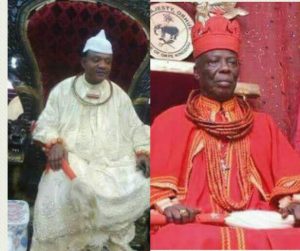
Urhobo traditional monarchy is usually headed by an Ovie(king) who oversees the affairs of his kingdom. He is assisted by the Oloroguns (Chiefs) and Ohovwores (Female Chiefs). He also vests ceremonial/honorary titles on well deserving non-indigenous persons.

The Urhobo people are very demonstrative when they speak. This usually adds a dramatic touch to their conversations. This is one of the reasons why Urhobos excel in the entertainment industry especially ially when it involves comic acts.
The Urhobo people usually greet by saying Mee-gwooo /mi:gwɔ:/ which means “I am kneeling o” and the response is Vreen-Do /vrɜ:dÖ/ which means “Stand up. Thank you.” Whereas “Mavor?” /ma:vɔ:/ means “How far?”.
The first Urhobo man to go to a university is McNeil Gabriel Ejaife of Okpara. He graduated with a B.A. (Hons) degree of Durham University in 1948.
The first Urhobo Professor is Frank Ukoli who was appointed in 1973. Six Urhobo academics have been vice chancellors of Universities, namely, Philip Kuale, Frank Ukoli, Andrew Onokerhoraye, Eric Arubayi, Andrew Evwaraye and Uvie Igun.
-The Yorubas have Afenifere, the Hausas have Arewa while the Igbos have Ohanaeze Ndigbo.
The Urhobos have UPU (Urhobo Progress Union). This is the apex socio-political and cultural group belonging to the Urhobos and it is one of the oldest social political and cultural groups in Nigeria.

The Urhobo traditional meal is Oil soup, also known as Ohwo soup by Urhobos, and Starch, known as Usi by the Urhobos.
The second traditional meal is Ukhodo (Yam and Plantain Soup) and Ameidi (banga soup).The Urhobos also take Ogbono soup, Pepper soup, Egusi soup, etc, as delicacies.
The first Nigerian indigenous monotheistic religion originated from the Urhobo town known as Kokori. This was where Ubiesha Atakpo started the Igbe Religious Movement. This movement seeks to worship and glorify a single God (known as Oweya) through dancing and the consumption of native chalk.
Urhoboland has a good supply of crude oil. This is one of the reasons why it is a major site for oil exploration. For instance, the Erhioke oil wells of Kokori are thought to be among the shallowest oil wells in the world.
The Urhobos are highly educated and have the love for Western education. They are known to have one of the highest concentration of Professors, Doctors and Lawyers in the Niger-Delta region. Almost all the tertiary institutions in Delta State are situated in Urhobo land. i.e., Delta State University, Abraka; Petroleum Training Institute, Effurun; Federal University of Petroleum Resources, Ugbomro; College of Physical and Health Education, Mosogar; College of Education, Ejeba; Delta State Polytechnic, Oghara; College of Health Technology, Ufuoma, Micheal and Cecilia ibru university etc.
The Urhobo people maintain a closely-knit family unit. Family ties are strong and are maintained until death.
The Urhobos share Warri City together with the Itsekiris and Ijaws. Warri is the economic nerve center of Delta State. The native Urhobos in Warri are known as Agbassa-Urhobo or Agbarha-Ame and Okere-Urhobo. They maintain good relationships with their neighbours and have been known to inter-marry since time immemorial. When the Warri crisis started, the Urhobos were known to have been neutral in the issue.
The Urhobo name for God is Oghene. The name for Life is Akpo. The name for Love is Eguono. Many Urhobo names derive from these terms.
Many of Nigeria’s best comedians such as I Go Dye, Gordons, Akpororo, Alibaba, etc, are Urhobo. Urhobo musicians include Kefee, Yung6ix, YungHanz, Erigga, MTrill Chris Okotie.
The popular and award-winning sprinter, Blessing Okagbare, is also of Urhobo origin.
Some known Urhobo writers include : Ben Okri, Professors Tanure Ojaide, Isidore Okpewho, and Hope Eghagha, and Ben Omonode. The foremost Urhobo nationalist is Mukoro Mowoe.
Written by Omatagiren Ebruba