Turkey’s Delicate Position Regarding the War in Iran


The Oasis Reporters
April 23, 2026


By

Contractual doctoral researcher in International Relations, University of Paris-Panthéon-Assas
Albert Kandemir, Paris-Panthéon-Assas University
Albert Kandemir does not work for, consult, own shares in or receive funding from any company or organisation that would benefit from this article, and has disclosed no relevant affiliations beyond their academic appointment.
For Turkey, the Islamic Republic of Iran is both a rival in terms of regional supremacy and an ideological model very different from its own. But Tehran is also a major energy supplier and a partner in the repression of Kurdish fighters. Overall, it is a troublesome neighbor, but one with which Ankara has learned to cope. A potential fall of the Iranian regime could, moreover, be accompanied by an influx of refugees into Turkey. Beyond condemning the war, especially since it is largely being waged by Israel, with whom Turkey is at loggerheads, Erdogan’s government is therefore seeking to play the role of mediator to prevent major destabilization of the entire Middle East.
When describing the nature of the centuries-old relationship between Iran and Turkey, many analysts consider the Treaty of Zuhab (1639) to have been a turning point. Indeed, this agreement ended nearly 150 years of conflict between the Ottoman and Safavid Empires and established the border between the two states. Some even claim that this treaty has survived through the ages and has never been challenged. In reality, numerous conflicts arose after the Treaty of Zuhab. However, at the end of each war, the two empires systematically returned to a border close to that defined in 1639. Thus, a structural balance of power was established between the Turkish and Persian worlds: neither ever succeeded in absorbing or destroying the other.
This balance fostered the emergence of a complex diplomatic culture of forced coexistence that persists today and explains Turkey’s composure and caution regarding the war initiated by Israel and the United States against Iran on February 28, 2026.
Forced Coexistence: Relations Oscillating Between Structural Mistrust and Pragmatism
If, after the Second World War, Turkey and Iran were partners firmly rooted in the Western camp and united by the
First, economic interdependence. Indeed, during the Iran-Iraq War (1980-1988), Turkey was a major economic outlet for Iran. Even today, Iran remains Ankara’s third-largest gas supplier after Russia and Azerbaijan. Given the Iranian economy’s sluggish performance and Turkey’s complete dependence on foreign energy suppliers, the two countries find themselves in a situation of mutual need.
Furthermore, while Iran maintains economic and strategic ties with Russia and China, it is relatively isolated internationally due to US sanctions and its support for organizations considered terrorist by Western countries, such as the Lebanese Hezbollah and the Yemeni Houthis. Turkey, on the other hand, is both an economic partner of Russia, integrated into China’s Belt and Road Initiative, and a member of NATO. The relationship with Ankara thus offers Iran a form of regional and international integration. Moreover, Turkey has been heavily involved as an intermediary in the negotiations between the Islamic Republic and the West regarding Iran’s nuclear program.
Furthermore, both countries share a repressive culture against any attempt at Kurdish political autonomy (it should be noted that Kurds represent approximately a quarter of the population in Turkey and a fifth of the population in Iran).
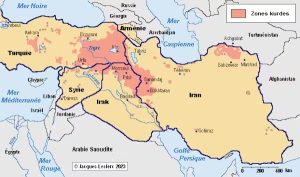
Thus, during the Syrian civil war, despite their differences, Ankara and Tehran sometimes collaborated to neutralize Kurdish positions. Generally speaking, Turkish and Iranian authorities acknowledge their cooperation in the fight against Kurdish organizations classified as terrorist groups, notably the PKK (Kurdistan Workers’ Party) and the PJAK (Party for a Free Life in Kurdistan), both organizations belonging to the Union of Communities of Kurdistan, which is accused of working towards the dismemberment of Turkey and Iran and of being supported by external powers, particularly Israel and the United States.
This is where another determining factor emerges in relations between Ankara and Tehran: mistrust of the Jewish state.
Why Turkey fears an Israeli political and military victory against Iran
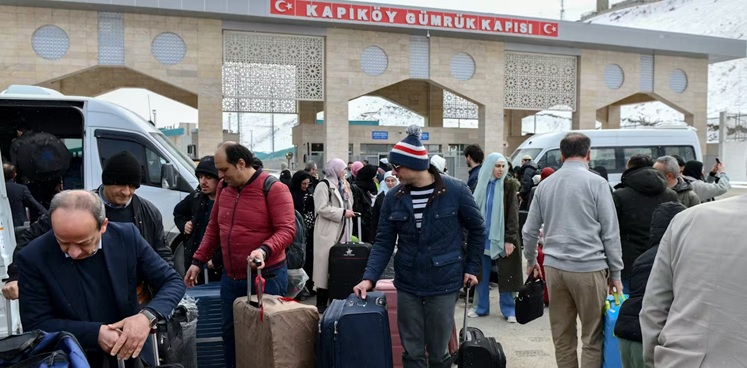
To understand the Turkish position regarding the war in Iran, one must therefore start from three premises. First, Turkey’s caution in no way reflects an ideological affinity between Ankara and Tehran. As mentioned above, Turkey is heavily dependent on gas supplies from Iran. Moreover, due to various regional conflicts, Turkey has become the second-largest host country for refugees in the world – especially Syrians. This situation is causing numerous social, economic, and political tensions. One of the motivations for Turkey’s support of the rebel groups that contributed to the overthrow of Bashar al-Assad was, in fact, his persistent refusal to negotiate the terms of the return of the three million Syrian refugees in Turkey. Iran is the country hosting the largest number of refugees in the world, the vast majority of whom are Afghans. A regime change leading to a power vacuum is therefore seen by Turkey as an imminent danger that could trigger a new influx of refugees into its territory. In recent days, Turkey has militarized its border with Iran to prevent this risk.
Furthermore, Israel and the United States have repeatedly discussed the possibility of using Kurdish rebel groups to overthrow the Iranian regime. Currently, no reliable source confirms their involvement against the regime. However, if this were to materialize, Turkey would likely provide intelligence to Tehran to neutralize these forces. Ankara has already stated that it is closely monitoring the activities of the PJAK. While a direct Turkish operation on Iranian soil seems unlikely, it remains a possibility to consider. It is worth recalling that the objective of Turkey’s first military operation in Syria (“Euphrates Shield”) on August 24, 2016, was to prevent Kurdish political autonomy in northern Syria, on the Turkish border.
Finally, there is a widespread, cross-party belief in Turkey that Tel Aviv seeks to neutralize any power in the Near and Middle East whose interests conflict with its own. While President Recep Tayyip Erdoğan expressed his “deep sadness and concern” over the attack launched against Iran by the United States and Israel, which he attributed to “a provocation by Benjamin Netanyahu,” the leader of the CHP (the main opposition party), Özgür Özel, made similar remarks: “Israel attacked Iran. Our party condemns these attacks in the strongest possible terms. We convey our feelings of solidarity to the Iranian people.”
Although Turkey was the first Muslim-majority country to recognize the State of Israel, relations between Ankara and Tel Aviv have deteriorated significantly since the late 2000s, following Erdoğan’s “one-minute speech” and the Israeli attack on the Marmara flotilla. Despite occasional attempts to resume dialogue, tensions have intensified in recent years—particularly due to Turkey’s strong condemnation of Israel’s war in Gaza in retaliation for Hamas’s attacks of October 7, 2023—and culminated after the fall of Bashar al-Assad in December 2024.
Indeed, Turkey claims to be working to preserve the integrity of Syrian territory and accuses Israel of contributing to its fragmentation by supporting militant groups such as the Druze and Kurds, and of its dispossession by extending its illegal control over the Golan Heights. Thus, the two countries find themselves in a hegemonic competition in Syria. Consequently, from Turkey’s perspective, if Iran were to fall, due to its own rise to power, Ankara would be next on Israel’s list.
Numerous statements by Israeli officials support this view. Naftali Bennett, former prime minister (2021-2022), declared on February 17, 2026: “A new Turkish threat is emerging. Turkey is the new Iran. Erdogan is dangerous and seeks to encircle Israel.” While not as explicit, some


