Young Nigerian Women Want To Go Into Politics – Party Rules And Older Men Keep Them Out


The Oasis Reporters
August 2, 2026


Omomayowa Olawale Abati, University of Essex
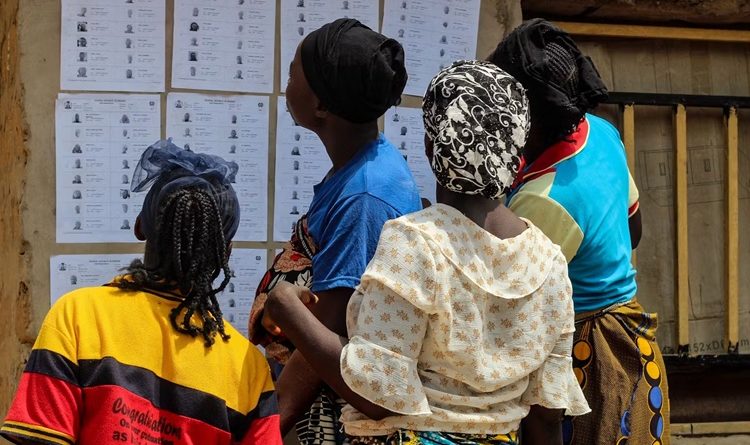
Nigerians will return to the polls in 2027. Campaigns will commence, crowds will fill the streets for party rallies, but the most consequential decisions about the elections are already happening. They are taking place in party offices, at the homes of powerful political godfathers, and in selection processes that most Nigerians never attend and sometimes don’t hear about.
This is where the most vulnerable group, young women, lose. Nearly half of Nigeria’s population is female and more than 70% is younger than 30 years. Yet women and young people continue to be grossly underrepresented in the country’s politics. Nationally, 6.7% of elected positions and appointments are occupied by women. The global average is 22.5% and Africa’s is 23.4%.
Those who want to contest for elective offices signify their interest at their wards, where they must secure support before going to the local governments or senatorial zones or states. This depends on the offices they want to vie for.

Two changes have been made in the past 10 years to address the underrepresentation of women and young people. The first was the 2018 Age Reduction Law, also known as Not Too Young to Run. It lowered the minimum candidacy age to 25 for State Houses of Assembly and the House of Representatives. Then in 2022 the country’s two dominant parties, the All Progressives Congress (APC) and Peoples Democratic Party (PDP), announced fee waivers for women and a 50% discount for young aspirants. These are fees paid to political parties to purchase nomination forms.
But these changes have failed to shift the dial. Only two young women (aged under 30) won seats across Nigeria’s 36 state assemblies in the 2023 elections. Women aged between 30 and 35 managed to secure three seats in 2019 and 2023 state assembly elections. At the national level, the youngest women are in their 40s.
Our initial research as political scientists found that dominant political parties nominate only a few young (male and female) candidates. Minor parties field the highest numbers of young candidates.
In follow-up research, we studied the reason for this: examining how formal rules and informal norms of parties interact to shape the political candidacy of young women in Nigeria.
The research included 40 interviews with party leaders and candidates in the All Progressives Congress and the Peoples Democratic Party. We asked candidates about party selection practices and the roles of gatekeepers, money and godfathers, and how they navigate the party selection process. We asked party leaders about their statutory and non-statutory roles in selecting party candidates and what they perceived of young party aspirants.
What we found
We found that in Nigeria’s two dominant political parties, young women aspirants face a range of age- and gender-biased challenges.
These play out in:
-
-
visits to party elders, who are mostly elderly men, who hold the reins of power in these parties. While these visits are not obligatory, they are necessary in Nigeria to secure the support of the party elders
-
-
-
ancestral-lineage scrutiny, where the right of married young women to contest for political offices in their father’s and husband’s state of origin is questioned by senior male party members
-
-
-
“godfather networks” – sponsors of candidates, usually those with money to finance campaigns
-
-
-
financial barriers, where aspirants are not only expected to be up-to-date in payment of membership dues but are required to sponsor party events.
-
Our findings show that gender and youth disadvantage are reinforced through informal practices of parties. Our findings also expose why quotas or fee waivers can’t fix a system where the real gate-keeping happens in the shadows of internal party politics.
What’s not changed
Nigeria’s new Electoral Act 2026 abolished indirect primaries. This was a delegate convention system that gave party elites their most reliable tool for controlling outcomes. Previously, aspirants were informally expected to have sponsored delegates into party positions years in advance. Such positions are party offices at the ward, local government and state levels. These delegates will then vote during the indirect primaries.
One young male aspirant in Kwara told us he had facilitated key delegates’ emergence in 2015, “so in 2019, when the time came to lobby them, it was effortless”. No young woman we interviewed had built the same network. That particular mechanism is now unlawful.
With Section 87(2) also requiring that failed consensus on candidates’ selections must revert to direct primaries, not back-room elite bargaining, the law has narrowed some space for manipulation. The consensus option is where there are no primaries and candidates emerge by affirmation.
But three critical gaps remain.
First, Section 86 removes the detailed statutory procedures that previously governed direct primaries, including ward-level voting, equal opportunity for aspirants, and participation of all registered members, replacing them with a requirement that primaries follow “party guidelines”. The parties that have consistently excluded young women are now writing the rules of their own primaries.
Second, the 2026 Electoral Act introduces no cap on party nomination fees. The APC’s state assembly nomination form, which cost 2 million naira (US$1,465) in 2023, then a 135% increase from 2019, now costs 6 million naira (US$4,396), a 200% increase from the last election. This is not an electoral cost. It is a filter. The new law leaves it entirely unregulated.
Third, Sections 83(5) and (6) bar courts from hearing internal party matters. It means young women can’t challenge unlawful exclusion.
Moving forward
Other gaps remain ahead of 2027 elections:
-
-
a statutory cap on nomination fees, enforced by the Independent National Electoral Commission
-
-
-
enforceable youth-gender quotas at the candidate selection stage.
-
This would compel major parties to field young women in competitive seats, not merely posts under affirmative action.
These reforms would reduce the need for young politicians to solicit the support of powerful men. The question is whether the political will exists to change the rules.
Under-representation is not a supply problem. The evidence from 2023 shows young Nigerian women with political ambition came forward in large numbers. The bottleneck is demand, and what parties choose to do with them once they arrive.
Mayowa Adeniji contributed to the research on which this article is based.
Omomayowa Olawale Abati, Senior Research Officer, University of Essex
This article is republished from The Conversation under a Creative Commons license. Read the original article.


