Embargo In Cuba: Agroecology To Avoid Food Collapse


The Oasis Reporters
April 24, 2026


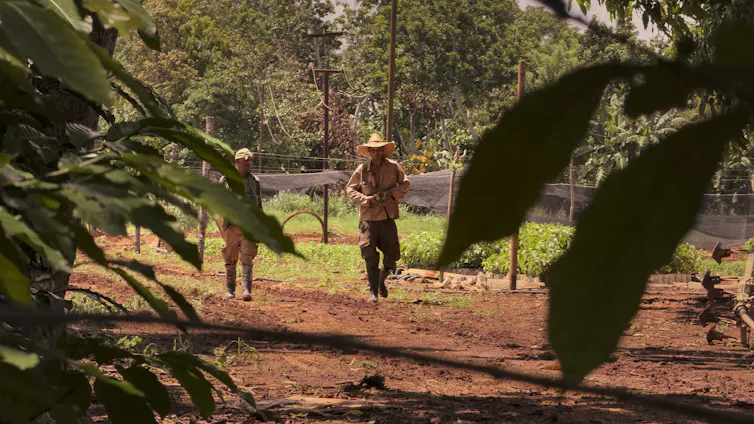
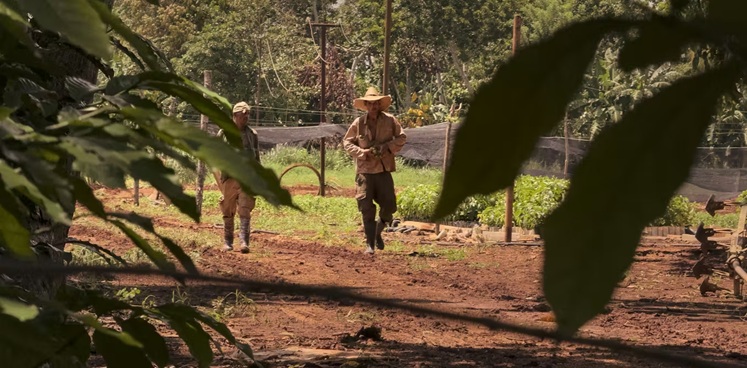
Between the embargo, the polycrisis, and shortages, the island is resisting a major food crisis. Through what mechanisms and for how long?
R. Belmin/Cirad, CC BY-NC-ND
Raphaël Belmin, CIRAD; Giraldo Jesús Martín Martín, Universidad de Matanzas; Ludovic Temple, Cirad, and Paula Fernandes, Cirad
How can we avoid food collapse when a country is living under a prolonged embargo and its alliances are weakening? A recent study in Cuba highlights the reactivation of agroecology, already mobilized during previous crises, now being reinvested in more hybrid and decentralized forms.
Since the 1959 revolution, feeding the population has been a pillar of the Cuban political project. The state has made food a public service: centralized imports, planned production, and rationing through the libreta, a booklet distributed to each family allowing access to essential goods in state-run stores at subsidized prices.
The objective was clear from the outset: to guarantee universal access to food. Cuba has not deviated from this objective, despite the long-standing embargo imposed by the United States since 1962. In this context, Cuba’s alliance with the Soviet Union long helped stabilize this model by providing energy, pesticides and agricultural fertilizers, seeds and seedlings, veterinary supplies, and foreign currency.
A State-Based Food System Dependent on External Factors (1960s-1980s)

The Cuban system at that time relied on a highly centralized production apparatus. State agriculture—the sector estatal—comprised the farms inherited from the large agricultural enterprises nationalized after 1959. These public farms, managed by state-owned companies, operated with agricultural workers paid fixed wages, planned production targets, and centralized supply chains for pesticides, fertilizers, and energy. At their peak in the 1980s, state agricultural enterprises covered nearly 80% of the national agricultural land, leaving only 20% in the hands of the private sector.
This institutional and productive structure held as long as external support cushioned shocks, whether internal or geopolitical. However, in the early 1990s, the collapse of the Soviet Union caused a sharp decline in trade, financial support, and supplies of energy, fertilizers, and pesticides in Cuba. Weakened in its economic and productive foundations, the country has been forced to reinvent its agricultural model.
From Forced Agroecology to Political Institutionalization (1990s-2010s)
This context of scarcity in the early 1990s, known as the “período especial” (“special period”), led to a profound shift in the Cuban production system. Crop diversification, organic matter recycling, animal traction, and the production of bio-inputs (products of biological origin used in agriculture to replace or reduce chemical inputs): a survivalist agroecology gradually took root and spread on a large scale, both in rural areas and in the heart of cities.
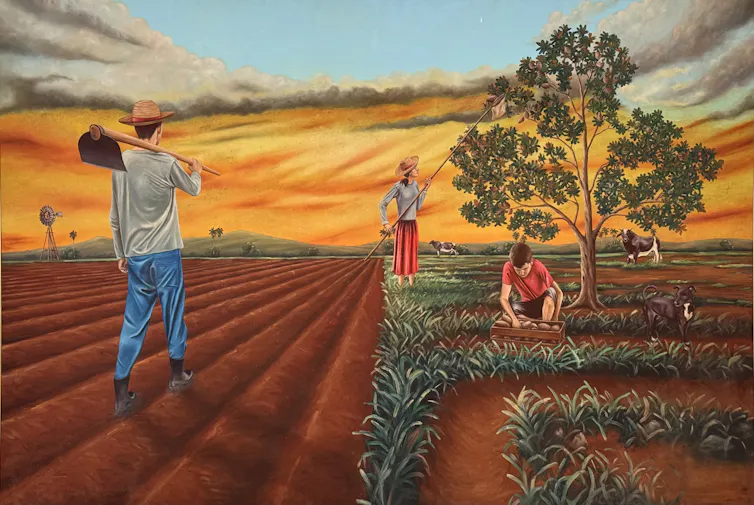
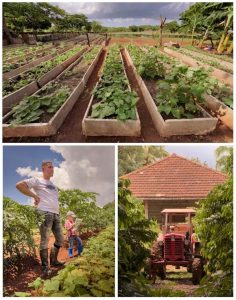
These transformations are, on the one hand, encouraged by an agrarian policy that transforms certain state farms into cooperatives and redistributes land under usufruct to producers. On the other hand, they are accompanied by a vast state program of urban and suburban agriculture aimed at bringing producers and consumers closer together, primarily on organic principles: small-scale market gardens, often managed using bio-intensive raised beds (see photo below), with reformed payment methods designed to be more incentivizing.
Initially perceived as a pragmatic adaptation to scarcity, this dynamic was subsequently institutionalized, eventually becoming a political and ideological framework linking food sovereignty, social justice, and national resilience.
The 2000s and 2010s were then marked by a form of relative normalization. Venezuelan support, the partial resumption of imports, and the return of synthetic fertilizers and pesticides have relegated agroecology to a secondary role in certain sectors, without, however, erasing the skills and practices acquired. National data indicate a significant increase in agricultural production, particularly for roots and tubers (cassava, taro, yam, potato, etc.), vegetables, and legumes, despite input levels remaining persistently lower than those of the pre-1990 period.
Cuba in Polycrisis: A Centralized Food System Become Vulnerable (2020s)
But at the turn of the 2020s, the accumulation of energy, economic, and geopolitical shocks revealed the structural vulnerability of Cuba’s centralized food model and precipitated its descent into a polycrisis.
The deteriorating situation in Venezuela from 2016 onward led to a drop in oil deliveries, while the tightening of the US embargo complicated access to fertilizers, pesticides, energy, and financing. Added to these external constraints were internal vulnerabilities: a heavy dependence on food imports, outdated infrastructure, and persistent logistical dysfunctions. As a result, from 2017 onward, national agricultural production declined in most strategic sectors—rice, vegetables, pulses, roots and tubers, fruits, and citrus fruits.
In 2020, this fragility shifted into a systemic crisis: the Covid-19 pandemic abruptly halted tourism revenue, the country’s main source of foreign currency. Deprived of external resources, the Cuban state saw its financial flexibility shrink sharply, weakening the centralized model of supply, distribution, and aid. The monetary reunification initiated in 2021, by generating high inflation, further exacerbated this dynamic.
As a result, Cuba now imports 70% to 80% of its food, at an annual cost of nearly two billion dollars (over 1.6 billion euros). While food products have been partially exempt from the embargo since 2000, these imports are subject to significant constraints, notably the requirement to pay in cash, without access to credit. Conversely, agricultural fertilizers and pesticides, as well as energy, remain heavily impacted by the tightening of sanctions.
In this context, economic access to food is deteriorating sharply. The libreta rationing system, long a cornerstone of food security, now covers only a limited portion of the population’s needs.
This situation reveals a structural tension: a highly centralized system dependent on external supplies becomes particularly vulnerable when these flows contract. Conceived as a universal food security mechanism, the Cuban state model is thus confronted with an accumulation of shocks that it struggles to absorb.
Resisting Under Constraint: Agroecology as a Discreet Driver of Cuban Resilience
However, despite the marked deterioration in food security, some nutritional indicators remain surprisingly stable. The prevalence of chronic undernourishment remains limited, infant mortality remains low, and food energy availability is comparable to the global average, well above the critical threshold of 2,100 calories (kcal) per person per day. This discrepancy between the weakening of the centralized system and the relative maintenance of nutritional balance raises questions about the true drivers of Cuban resilience.
Recent studies explain this paradox by a gradual shift in the center of gravity of the Cuban food system. As state-run supply mechanisms weaken, the productive and adaptive capacities of the non-state sector take over. The resilience of the Cuban food system no longer relies on its centralized structure, but on a shift towards decentralized dynamics.
Farms in the non-state sector currently provide the bulk of the nation’s food production: with approximately 40% of cultivated land, they contribute to over 80% of the food supply. In a context of increasing constraints, they also constitute the main hub of agroecological innovation.
They are experimenting with new farming techniques, investing in renewable energy, developing short supply chains, and reviving preservation and processing techniques, such as the dehydration of fruits and aromatic plants, and the production of tomato puree, goat cheese, and pickled vegetables. The polycrisis is thus acting as a catalyst, accelerating the decentralization of production and innovation.
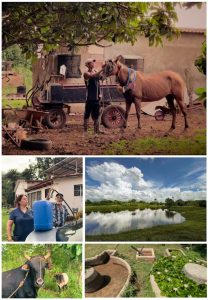
Agroecology is emerging in Cuba as a strategy for adapting to uncertainty and shortages, without, however, adhering to a strict self-sufficiency model. Farms remain hybrid, constantly adjusting their strategies to the conditions of access to resources. Producers alternate between self-producing bio-inputs and using imported fertilizers, and combine animal traction and mechanization to ensure the continuity of agricultural work despite energy constraints. Their produce supplies both state-run distribution channels (public stores, hospitals, libations) and informal local markets, which have become essential for selling surpluses and accessing cash.
This ability to navigate between different technical and institutional systems, rather than confining itself to a single model, is a central tenet of Cuban resilience. However, it is accompanied by increasing fragility: the emigration of young, active people reduces the available workforce, jeopardizing the transmission of know-how and limiting the capacity for innovation in labor-intensive systems.
There is no single figure that precisely quantifies the number of agroecological farms in Cuba. A key study suggests that more than 200,000 producers participate in the Campesino a Campesino agroecological movement, covering more than one million hectares and representing approximately 50% to 60% of the peasant sector. However, only a fraction of these farms—around 3,600—have agroecological certification from the Asociación Nacional de Agricultores Pequeños (ANAP).
These figures should, however, be interpreted with caution: they aggregate highly heterogeneous levels of engagement and include demonstration or experimental farms supported by public or cooperative programs, the representativeness of which remains to be documented.
Bio-inputs and biofactories: a revealing indicator of the tensions within the Cuban model
Bio-inputs offer a particularly revealing entry point into the tensions and adaptive capacities of the Cuban food system.
In a context of chronic shortages of imported synthetic fertilizers and pesticides, bio-inputs—particularly those based on beneficial indigenous microorganisms—play a strategic role in the Cuban agricultural system’s ability to continue producing. In this regard, Cuba possesses a long-standing scientific expertise in agricultural microbiology and a historical network of public biofactories conceived as infrastructures for technological and food sovereignty.
Send feedback
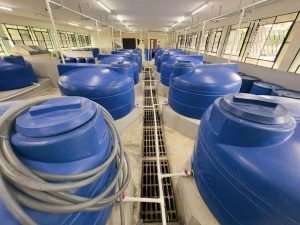
Like the agricultural sector as a whole, state-run biofactories are facing significant operational constraints due to energy and input shortages. Rising fuel costs are hindering distribution and have led to the closure of technical services that previously promoted and disseminated the product in rural areas. Transportation difficulties are also limiting farmers’ ability to purchase supplies directly from the factory, as they did previously. Added to this are constraints on access to substrates, growing media, packaging, and spare parts, all essential for the consistent production of bio-inputs.
This results in a growing gap between the existence of a formal public infrastructure and its operational capacity to meet producers’ needs.
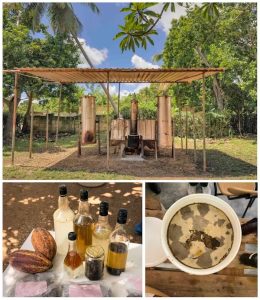
Faced with these limitations, forms of peasant and collective innovation are developing at the local level: as exemplified by the Cinco Palmas and Punta Las Cuevas farms (photos below), where the artisanal production of bio-inputs supports seedling production, supplies other farms, and is integrated into short supply chains. Far from emerging from nothing, these dynamics mobilize and reconfigure inherited knowledge, networks, and systems, reactivating and adapting them to contemporary constraints. More broadly, they illustrate a shift in the Cuban system’s capacity for innovation, from the state sector to decentralized and informal forms.
However, this decentralized agroecology remains largely invisible and poorly recognized within existing regulatory frameworks, which limits its dissemination and scaling up. It is at this interface that various research projects are situated, aiming to document emerging practices, evaluate their performance, and analyze the institutional conditions for their recognition.
When Agroecology Redefines the Role of the State
The Cuban experience shows that a food system can withstand extreme shocks and adapt by transforming its structures without collapsing. Under embargo, multiple economic crises, and regional geopolitical realignments, Cuba has so far avoided a major nutritional crisis. But this resilience no longer stems from centralized planning: it now relies on a shift toward decentralized and hybrid forms of agroecology driven by the non-state sector.
Paradoxically, this movement toward productive empowerment and decentralization does not directly clash with the state: it now finds explicit expression in official discourse. Decree-Law 128/2025 on the promotion of agroecology, which came into effect in September 2025, establishes agroecology as a strategic lever for food sovereignty, ecosystem preservation, and public health protection.
This text marks an important shift, since the State no longer presents itself only as a planner and distributor, but also as a facilitator of a transition aimed at strengthening autonomy in inputs, productive relocation and territorial resilience.


