Global Justice Report Offers Bold Ideas But Misses The Realities Of 2 Billion Informal Workers ‑ Economists


The Oasis Reporters
September 2, 2026



Laura Alfers, Rhodes University; Imraan Valodia, University of the Witwatersrand; Martha Alter Chen, Harvard Kennedy School, and Mike Rogan, Rhodes University
Rising inequality is, at its core, a political and policy choice. This is the central message of the Global Justice Report authored by experts based at the World Inequality Lab, led by economists Thomas Piketty and Lucas Chancel.
As economists and experts on labour, inequality and the informal economy, we believe there is a great deal to support in the report, which was released in June 2026. It is a bold effort to connect redistribution, climate action and global democracy.
Among the proposals it makes is the creation of a Global Justice Fund financed through additional taxes on the wealth and incomes of roughly the richest 1% of the world’s population. Much of the initial revenue would be invested in a World Sovereign Fund. The returns would finance continuing transfers to countries on an equal per-capita basis. These country dividends would support investment in health, education, climate action and infrastructure.
The report makes a number of other proposals too. These include moving towards “sufficiency”, through
a sharp reduction in labour hours and material footprint and large changes in consumption patterns, food habits, land use, and forest cover.
These proposals deserve to be taken seriously.
But the report’s understanding of how labour markets operate in the global south demands scrutiny. A programme conceived in the name of global justice must not turn the particular history and institutions of the developed world into the future prescribed for everyone else.
Rather, it should start from a defining economic reality of the global south. This is that most workers earn their livelihoods in informal employment, beyond the employment relationships, labour protections and redistributive institutions on which many of the report’s proposals implicitly rely.
Working time
Consider the report’s proposal on working time. It envisages using productivity growth to reduce average annual working time by more than half – from approximately 2,100 hours today to 1,000 hours by 2100. The report argues that this can be done without reducing workers’ incomes. A greater share of the remaining working hours would be devoted to relatively low-carbon services, particularly health and education.
The attraction is obvious. Productivity gains should give people more control over their lives, rather than simply producing ever-higher profits and consumption. Shorter working time could:
- create more leisure
- promote a fairer distribution of paid and unpaid work between women and men
- reduce the environmental consequences of production.
The historical record also shows that rising productivity has enabled substantial reductions in working time in many wealthy economies.
Our concern is with the assumption that the pathway followed by wealthy economies can be turned into a universal prescription. We believe that reducing working hours could reduce the incomes of the largest component of the workforce in developing countries: workers in informal employment, especially those in self-employment.
The proposal assumes a worker has an identifiable employer, a contract, a regular wage and defined hours of work. Productivity rises within the enterprise, and workers, usually through collective bargaining and labour regulation, claim part of those gains in the form of higher wages or shorter working hours. Their income can be maintained even as their hours decline.
But this is not how most of the world works.
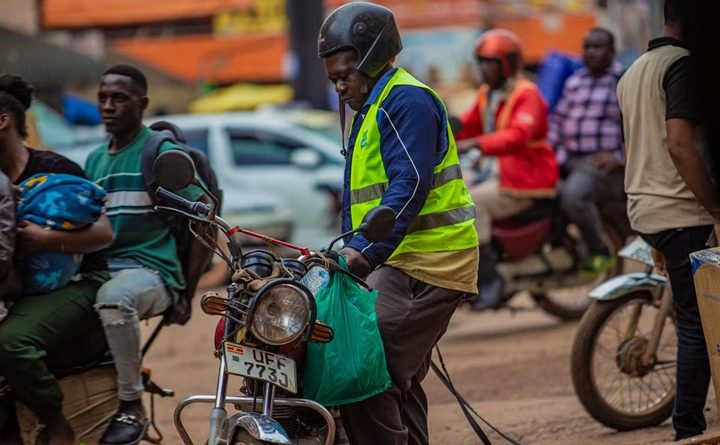
Just over 60% of the global workforce – approximately two billion people – is informally employed. The proportion is higher in developing and emerging economies. Moreover, well over half of informal workers are engaged in non-wage work. They include own-account workers, contributing family workers and subcontracted workers whose livelihoods may depend on contractors, supply chains or digital platforms, even though they are not formally recognised as employees.
A recent analysis of an International Labour Organisation database covering 91 countries suggests that only around 17% of workers are in formal wage employment. Yet it is this small part of the global workforce that most closely resembles the employment model underlying proposals to reduce working time.
For own-account and other informal workers, there is no employer who can be required to pay the same income for fewer hours. A street vendor, waste picker, home-based producer or small farmer does not gain more leisure simply because a government reduces the statutory working week. If earnings depend on how many hours a person trades, produces or searches for customers, reducing those hours without increasing hourly income will reduce total earnings.
For many of the world’s lowest-paid workers, therefore, the immediate need is not simply to work fewer hours. It is to earn more, and more predictably, for the hours they work.
The deeper objective should therefore be to give people greater control over their time. That cannot be achieved just by reducing working hours.
This also raises a question about productivity.
Productivity conundrum
The report assumes that future productivity gains can make shorter working time possible without reducing income. But productivity gains do not distribute themselves.
In many supply chains and digital platforms, workers classified as self-employed operate under highly unequal contractual arrangements. Lead firms, retailers, contractors and platforms can capture the gains from new technologies or more efficient organisation while transferring costs and risks to workers. Productivity may rise without workers receiving higher incomes, greater security or more control over their time.
The question is therefore who controls technological and organisational change, who captures the gains and whether workers can convert those gains into better lives.
This points towards a different policy agenda.
What protection should look like
Macroeconomic redistribution through global taxation and fiscal transfers is essential, but it cannot stop there. It must be matched by “pre-distribution”: changing the institutions and economic relationships that determine incomes and power in the first place.
Alongside social protection and public services, this requires:
- infrastructure and services that support livelihoods as well as protection against arbitrary eviction and confiscation
- improved access to finance, technology, markets and public procurement
- regulation that encourages employment and livelihood creation, while ensuring that firms, contractors and platforms exercising employer-like power bear a fair share of the responsibilities, costs and risks associated with production
- meaningful worker recognition and representation.
Different labour markets require different routes to greater freedom over time.
Working time is only one example of a wider problem.
Misplaced assumptions
Taxation, fiscal transfers and welfare systems have reduced inequality in wealthy countries. But these policies are effective in economies with:
- relatively high tax-to-GDP ratios
- mostly formal workforces
- the administrative capacity to reach most citizens.
In the global south, tax bases are often narrower, informal employment is widespread and welfare systems may have limited or uneven reach.
This does not weaken the case for the Global Justice Fund, for effective fiscal policies to reduce inequality, or for greater international redistribution.
But redistribution from above cannot substitute for understanding how incomes are generated, inequality is produced and economic power is exercised. Where the state’s fiscal and welfare reach is limited, the organisation of work, the terms on which workers participate in markets and supply chains, and their power to claim a fair share of the value they create become even more important.
Laura Alfers, Research Associate, Neil Aggett Labour Studies Unit, Rhodes University; Imraan Valodia, Pro Vice-Chancellor, Climate, Sustainability and Inequality and Director, Southern Centre for Inequality Studies, University of the Witwatersrand; Martha Alter Chen, Emeritus Lecturer, Harvard Kennedy School, and Mike Rogan, Associate Professor, Rhodes University
This article is republished from The Conversation under a Creative Commons license. Read the original article.


