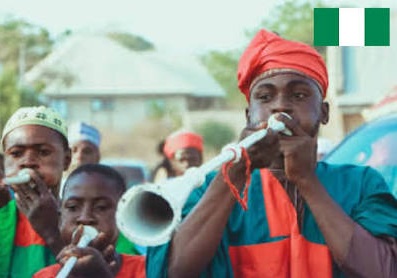
What Has Decades Of ‘Arewa Unity’ Produced For The Hausa People? A People Cannot Be Kept Asleep Forever


The Oasis Reporters
August 22, 2026


By Professor Aliyu Ammani

Have you noticed the mobilisation of reactionary forces against the Hausa reawakening movement?
Yes, they are out there. On both virtual and physical platforms, they are trying to extinguish the light of this movement with their mouths, both in mosques and on social media.
On Facebook, my “favourite” is an account that goes by the ‘name’ “A Wata Farfagandar”.
Sometimes I wonder: why should anyone oppose the noble aim of reawakening the consciousness of the average Hausa? A reawakening that would make the Hausa more useful to himself, his compatriots, and the nation at large?
Whoever kicks against this reawakening is, knowingly or unknowingly, defending a situation in which the Hausa, one of the largest indigenous populations in the country, have too often been denied the confidence, organisation, and consciousness necessary to determine their own destiny.
To understand the reasons behind the resistance to the Hausa reawakening movement — the sponsored pushback — we must look beyond romanticised history and examine the architecture of power, privilege, and political survival in Northern Nigeria. The resistance, particularly from sections of the traditional and political establishment that have benefited from the current order, may not simply be cultural paranoia.
A genuinely awakened Hausa identity consciousness has the potential to shake some of the pillars upon which that hegemonic order has rested.
FIRST, the erosion of historical and political legitimacy. At the heart of the resistance is the protection of historical narratives. For generations, the history of Northern Nigeria has been presented through a largely unified “Arewa” lens, sometimes at the expense of the distinct histories, identities, and experiences of the various peoples of the region. The 1804 ‘jihad’ and its aftermath occupy a central place in this conversation.
The Hausa reawakening encourages ordinary Hausa people to revisit that history and ask uncomfortable questions about conquest, political succession, assimilation, ancestry, and the transformation of indigenous institutions.
What happens when the Hausa masses begin to peel back the layers of the “Hausa-Fulani” fusion and ask: Who were our ancestors? What happened to our indigenous political institutions? And, how did certain ruling houses come to dominate traditional authority?
These are legitimate historical questions that can unsettle an established narrative.The moment people begin to distinguish between cultural affinity and political entitlement, the argument that historical relationships automatically confer perpetual privilege becomes much harder to sustain.
SECOND, the possible loss of the demographic shield. In Nigerian politics, numbers are currency. For decades, broad identities like “Arewa” and “Hausa-Fulani” have been used to mobilise enormous numbers into a single political constituency. There is nothing wrong with unity. The problem arises when unity becomes a tool for securing the loyalty of the masses while insulating elites from accountability.
The Hausa reawakening threatens this arrangement because an awakened population will start asking questions.
What has decades of “Arewa unity” produced for the ordinary Hausa man and woman? Why does the Hausa heartland still struggle with extreme poverty, educational deprivation, insecurity, unemployment, and agricultural decline despite the region’s enormous political weight?
Why should demographic strength consistently translate into support for elites without corresponding demands for accountability and development?
These are questions a politically conscious person will ask. And that is where the danger lies for any hegemony accustomed to mobilising people through inherited identities and traditional loyalties.
THIRD, the emirate institutions of mainstream Hausaland. For generations, the palaces of Sokoto, Kano, Katsina, and Zaria have been centres of social prestige, cultural authority, and, at various times, considerable informal political influence.
The call for greater indigenous Hausa participation in these institutions raises a big question: should traditional institutions in historically Hausa territories remain permanently tied to particular aristocratic lineages, or should their evolution reflect the indigenous populations among whom they exist?
For those who benefit from the current arrangement, this is a disturbing question. For the Hausa reawakening movement, it is a question of historical consciousness and institutional fairness. It challenges the age-long assumption that the political and traditional consequences of history must remain frozen forever.
FOURTH, the fear of economic and institutional reckoning. Perhaps the most important reason for resistance is economic. Identity consciousness does not remain cultural forever. Once people become conscious of who they are, they begin to ask what their society should look like and why it has remained underdeveloped.
A politically conscious Hausa population will demand better schools, stronger institutions, improved agriculture, greater economic opportunity, accountable leadership, and equitable investment in human development.

It will question patronage. It will question inherited privilege. It will question the use of poverty as a political mobilisation tool. It will ask why ordinary people should remain perpetually poor while political and traditional elites, regardless of ethnicity, continue to enjoy disproportionate access to power and resources.
That is where cultural awakening becomes economic and political awakening. And that, perhaps, is what truly frightens some people.
Dear reader, the Hausa reawakening is a call for the Hausa to wake up. To know who they are. To understand their history. To appreciate their civilisation. To protect their language and culture. To organise. To demand accountability from those who claim to represent them. And above all, to understand that friendship with other people does not require the abandonment of one’s own identity. Genuine unity is strongest when it is built among self-conscious peoples, not unconscious ones.
The resistance against the Hausa reawakening movement will continue. Some will preach against it from the pulpit. Some will ridicule it on social media. Some will deliberately misrepresent it. Others will invoke old fears and accuse anyone who speaks of Hausa identity of trying to create division and hatred. But people cannot be kept asleep forever simply because someone is comfortable with their sleep.
The light has been switched on. As the Hausa saying goes, “in rana ta fito, tafin hannu baya rufe ta” (When the sun rises, the palm of the hand cannot cover it).
And once people begin to see themselves clearly, it becomes increasingly difficult to persuade them to close their eyes again.
Aliyu Ammani is a professor of Agricultural Economics at Ahmadu Bello University, Zaria.


