Why And How US And Canadian Energy Markets Are So Deeply Intertwined


The Oasis Reporters
October 19, 2026


J Studios/DigitalVision via Getty Images
Stefano Tijerina, University of Maine
The 50% tariffs imposed by President Donald Trump’s administration on imports from Canada in July 2026, and the reciprocal 50% tariffs imposed by Prime Minister Mark Carney’s administration on imports to Canada from the U.S. a month later, do not include oil and natural gas. Electricity and some petroleum products were also left out, although they remain subject to a 10% tariff imposed in 2025.
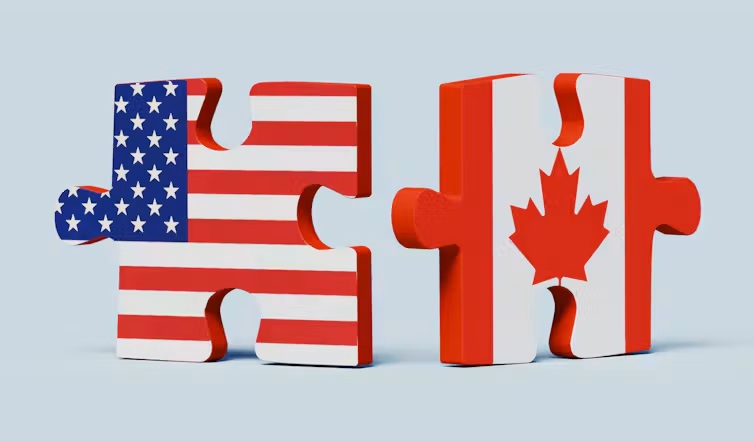
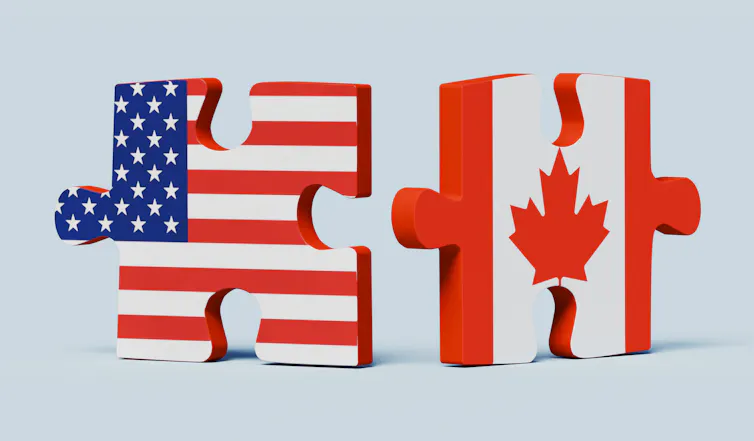
That’s because the two countries’ energy systems and markets are so intertwined that tariffs would devastate both economies. Canada is the biggest supplier of foreign petroleum to the United States, supplying half of all its petroleum imports. It is also the only direct foreign supplier of electricity to the U.S., with 34 major transmission points moving electricity from Canada south across the border.

In truth, Canada could shut down those power links and leave thousands of Americans in the dark, as Ontario provincial Premier Doug Ford threatened in August 2026.
But researchers like me, who study the historical links that have shaped Canadian and U.S. business relations, know that over the past 50 years Canada has expanded its energy production with one specific goal: serving U.S. consumption. In 2024, 84% of Canadian oil production and 76% of Canadian electricity production were exported to the U.S. Without American buyers, there is no real energy market in Canada.
Early connections
Since the second half of the 19th century, energy generated on both sides of the border – and across them – has connected the two nations. The Great Lakes Basin was the hydraulic center of energy interconnectivity, as both nations shared the energy generated by Niagara Falls and the St. Lawrence River.
During the early stages of World War II, even before the U.S. entered the fight, Canada and the U.S. started to integrate their energy systems. That work was part of joint security efforts to protect North America through the integration of defense manufacturing production systems.
The Ogdensburg Declaration of 1940 and the 1941 Hyde Park Declaration consolidated and formalized the strategic economic and military cooperation between the two countries and set the foundations for future collaboration.

Steven_Kriemadis/iStock / Getty Images Plus
From cooperation to integration
After the war, Canadian and U.S. businesses liked the idea of sharing production and manufacturing operations, even beyond war-related work.
Nevertheless, manufacturing on both sides of the border went back to prewar ways of producing things domestically. Nationalist voices opposed the idea of further integrating the Canadian and U.S. economies.
Less than two decades after the war ended, though, the two nations signed the Auto Pact of 1965, which eliminated tariffs on cars, trucks and automotive parts. Canadian parts manufacturers could compete directly with those based in the U.S., all to serve U.S. automakers.
This initial experiment in free trade revealed to businesses on both sides of the border that supply chain integration could benefit other production and service industries.
By 1989, the two countries had signed a full-scale free trade agreement that removed tariffs for goods crossing the border in either direction. That opened the door for more closely integrating their energy markets too.
In 1992, a U.S. federal law changed a wide swath of regulations over the country’s energy markets. Some of the provisions allowed Canadian companies to sell excess energy to the U.S., and two years later the North American Free Trade Agreement brought Mexico into the relationship too.
NAFTA integrated the production, processing and distribution of thousands of goods and services across all three countries.

Lars Hagberg/AFP via Getty Images
But it was the interconnection of energy infrastructure that turned the Canadian and U.S. economies into one single energy market. Today, four major U.S. electrical grids depend on imported power from Canada: those serving the six New England states, New York state, 15 states across the Midwest and the South, and California.
Moreover, there are more than 40 natural gas and petroleum liquids pipelines connecting Canada with the United States. And although energy products move back and forth across the border, the U.S. has an energy trade deficit with Canada. Much of the U.S. economy runs on Canadian energy, and much of Canada’s energy production is sold to the U.S.
The current reality on the ground shows an integrated energy system between the two nations: something very difficult and costly to untangle, and a process that would take decades to reengineer.
Local impact
Today, those links form the basis for very tight integration between the two countries’ business and industrial marketplaces.
For example, Maine, where I live and work, gets close to 30% of its electricity from Canada.
The state’s northern electrical grid is run by the New Brunswick Power Corp., owned by the province of New Brunswick, which serves close to 60,000 Mainers.
Today, Maine’s electric grid is owned mostly by foreign interests, including ENMAX, the municipally owned utilities corporation of Calgary, Alberta, and the owner of Versant Power, which serves 16% of Maine’s market. And 80% is served by Central Maine Power, which is owned by Iberdrola from Spain.
Canadian energy reaches deeper into the U.S., too. In 2025, Hydro-Quebec, a company that generates electricity from dams across the province of Quebec, secured a deal with local regulators to use Maine as a corridor to supply clean energy to Massachusetts. Hydro-Quebec is owned by the government of the province of Quebec.
The bilateral integration of energy infrastructure over the past 30-plus years explains why this sector was exempt from the most recent tariffs.
Stefano Tijerina, Senior Lecturer of Management, University of Maine
This article is republished from The Conversation under a Creative Commons license. Read the original article.


